Tag: homesteading

  • Cheap, Low-Tech Home Accessibility When You’re Blind

    Cheap, Low-Tech Home Accessibility When You’re Blind

    A lot of what makes my house accessible for me would not look like much to anyone else.

    I use plenty of technology. I like smart devices when they actually make my life easier. But a lot of the most reliable accessibility in my house is cheap, low-tech, and already sitting in a drawer somewhere.

    It is not always a smart device that speaks to me. Or even a braille label. Sometimes it is a rubber band around the conditioner so I do not wash my hair twice and condition it zero times. Often it is a container that does not match the others on purpose.

    The uniform pantry aesthetic will never be my reality. A beautiful row of identical containers may look organized, but if they all feel the same, I am going to mix them up eventually.

    I once mistook leftover mashed potatoes for sour cream.

    Ten out of ten, do not recommend.

    If It All Feels the Same, I’ll Mix It Up

    That is why I use bump dots, rubber bands, odd containers, and routine.

    Putting things back is its own thing. It is not just a good habit. It is how I make sure I can find the thing again. A charger moved to a “better” spot. An ingredient set down somewhere creative.

    That can stop a project cold.

    I have heard whispered rumors that it is possible to train an entire household to put everything back exactly where it belongs. I cannot verify this. So I build systems around the things that are mine to manage.

    Smart Is Nice. Independent Is Better.

    I am not anti-smart-device. I like them when they make my life easier.

    My thermostat works well. The app is accessible, and I can control it from my phone. My Ring devices are useful too. They give me useful audio alerts, and the app works well with VoiceOver.

    Then there is my oven.

    It is smart. Technically.

    I can set it from my phone, but before I can use the app, I have to press a smart button on the flat control panel.

    That is not really accessible. That is the accessible part hiding behind the inaccessible part.

    That is usually my test.

    Can I use it without calling someone over?

    A Few Low-Tech Things That Help

    So: rubber bands, different clips for different bags, and a rule that the thing goes back where it lives.

    I also use bump dots, especially the really small ones. Some are sold as Loc-Dots. They are nice on flat panel appliances.

    Can I feel it, locate it by routine, or control it without guessing? If not, I need to change something.

    Good places to start are bottles that feel alike, flat appliance panels, food containers, chargers, remotes, and anything people keep moving.

    I’ll write more about labeling separately, because that is its own whole subject.

    For now, that is the main idea. Accessible does not have to mean expensive or impressive. A lot of the time, it just has to be reliable.

    Resources

    Quick note: this is just my opinion and what I do in my own house. Different things work for different blind and low vision people. Yes, I should probably braille label more things than I actually do. Sometimes I do. Often, I grab a rubber band and move on with my life.

    For more thorough organizing and labeling ideas, these are good places to start:

  • Feeding the masses 🐶🐶🐶🐱

    Feeding the masses 🐶🐶🐶🐱

    We have four indoor animals.

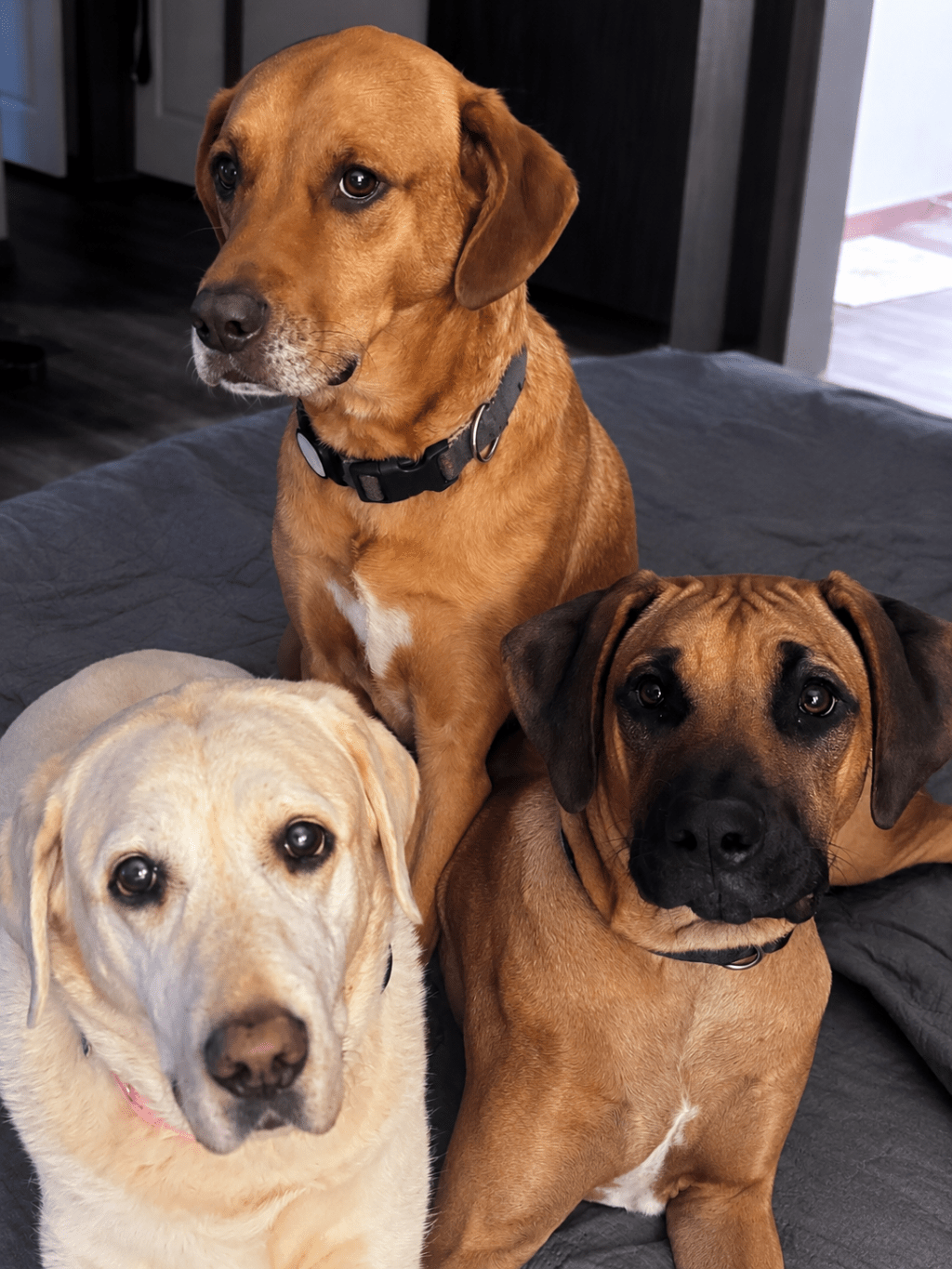
    Three dogs.

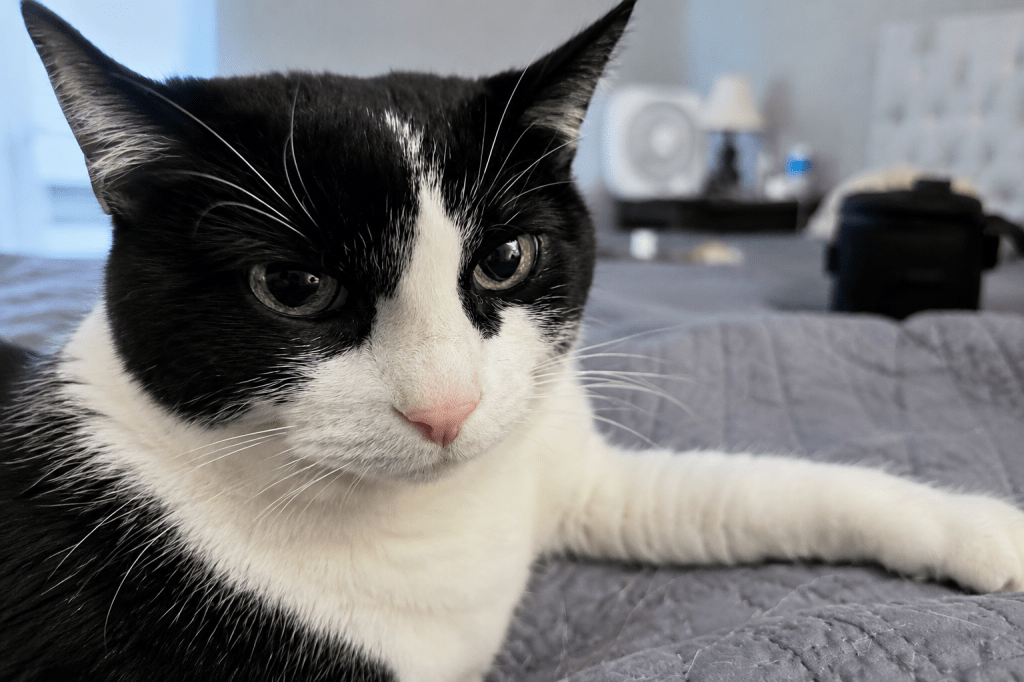
    Hogan, a black-and-white cat with green eyes, resting on a grey bed with one white paw stretched forward, gazing toward the camera.

    One cat.

    Feeding them has become… a system.

    Mostly because I’m blind.

    If everything looks the same, eventually I’m going to grab the wrong thing. So I don’t make everything the same.

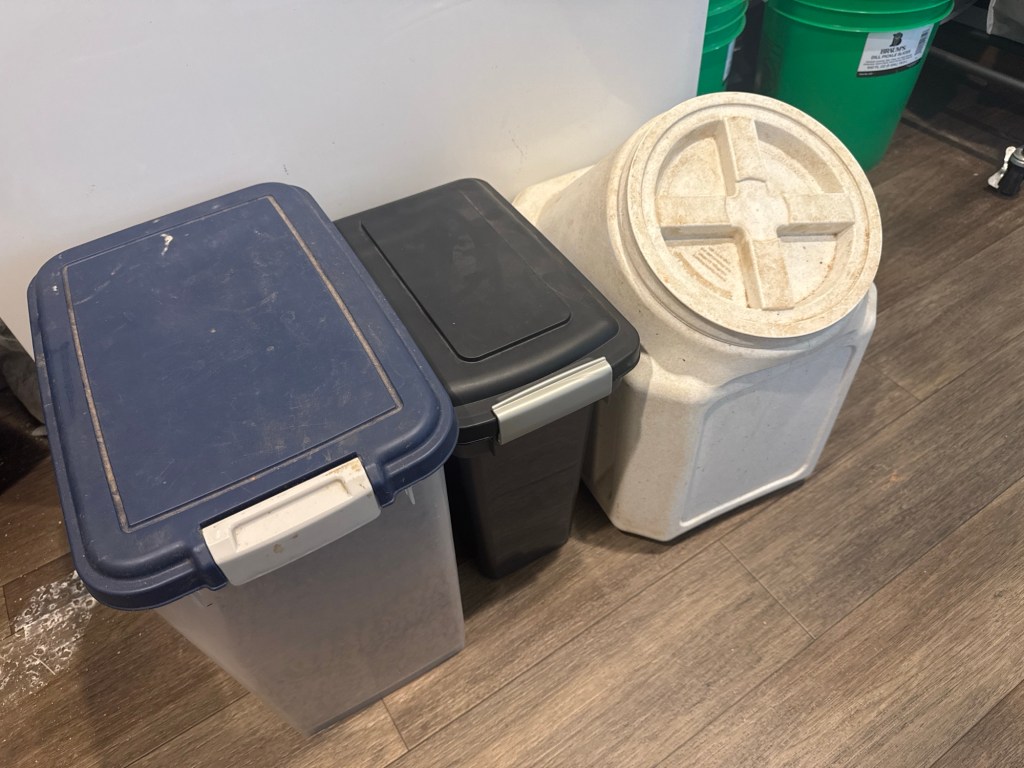
    Three different pet-food storage bins lined up on a wood floor against a white wall — a navy rectangular bin, a black rectangular bin, and a round cream-colored bin with a screw-top lid — each a different shape and size, with a green bin behind them.

    Hogan’s cat food is in a different container than the dogs’. Different shape. Different size.

    Works for me.

    Heloise is almost eleven.

    She’s had more than a dozen teeth removed over the years, so every now and then we call her Fourteen Teeth.

    She still has plenty of opinions.

    I bought her a slow feeder bowl.

    Then Hoss got one.

    Then Hondo.

    Now everybody eats a little slower.

    We’re also trying a couple of puzzle toys.

    The jury’s still out. The dogs seem interested. I like that dinner lasts longer than thirty seconds.

    Hoss is the one with the sensitive stomach.

    Food matters.

    Treats matter too.

    We’ve learned that one the expensive way.

    Hondo, on the other hand, has never met a meal he didn’t think should be finished immediately.

    Being blind changes how I notice things.

    I don’t watch them eat.

    I listen.

    I notice who’s still crunching.

    Who’s already checking somebody else’s bowl.

    Who’s asking to go outside again.

    And yes…

    Sometimes I know somebody’s stomach isn’t happy before anyone else in the house.

    Hondo isn’t subtle.

    None of this is complicated.

    It’s just a bunch of little systems that make life easier.

    For me.

    And I think for them too.

    Things we’re using lately:

    • Slow feeder bowls
    • Puzzle toys (still testing these)
    • Food for Hoss’s sensitive stomach
    • Separate food containers for Hogan and the dogs

    If you’re curious about the slow feeder bowls or anything else we use around here, I keep them all on my Gear I Use page.

    As an Amazon Associate I earn from qualifying purchases, at no extra cost to you.

  • Chicken hatching 🐣 from my closet!

    Chicken hatching 🐣 from my closet!

    This post contains an affiliate link. If you purchase through it, I may earn a small commission at no extra cost to you.

    Chicken Incubators Assume You Can See

    Most people hear “blind” and immediately lower the difficulty setting on what they think my life looks like.

    Some people are genuinely surprised I can cook dinner, raise kids, keep animals alive, or work full time without accidentally wandering into traffic.

    The truth is, blindness changes a lot of things. But it usually doesn’t change things in the ways people expect.

    Some of the stories you’re going to read here are probably going to sound a little ridiculous.

    So with that in mind, let’s get into today’s chaos.

    I have a leghorn that I absolutely love. She was part of the first five chickens I ever got when we started our flock. She’s solid white, and her name is Mrs. Black.

    Not the smartest chicken, bless her heart, but she follows me around like a little dog and yells at me if I’m late bringing snacks.

    After being heavily influenced by other chicken people online, I eventually bought an incubator and got the bright idea that I should probably hatch eggs myself. (This is the incubator I used — Harris Farms Nurture Right 360.)

    That’s how I discovered that chicken incubators are apparently designed with the bold assumption that the person using them can actually see the display.

    There are basically three things you need to monitor when you’re incubating eggs: humidity, temperature, and how many days the eggs have been in there.

    All of which, of course, are displayed on a tiny digital screen on top of the incubator.

    So naturally I started engineering my own accessibility features.

    First, I moved the incubator into my closet because my dogs absolutely could not be trusted around what was essentially a warm plastic box full of future chicken nuggets.

    Then I bought a Bluetooth thermometer that connected to my phone so I could monitor the humidity and temperature inside the incubator without needing to read the built-in display.

    The humidity tray inside the incubator also needed regular refilling.

    Thankfully, there was a tiny external fill port for the humidity reservoir, so I used a cup of water and a small plastic tube to refill it from outside the incubator.

    And somehow it worked.

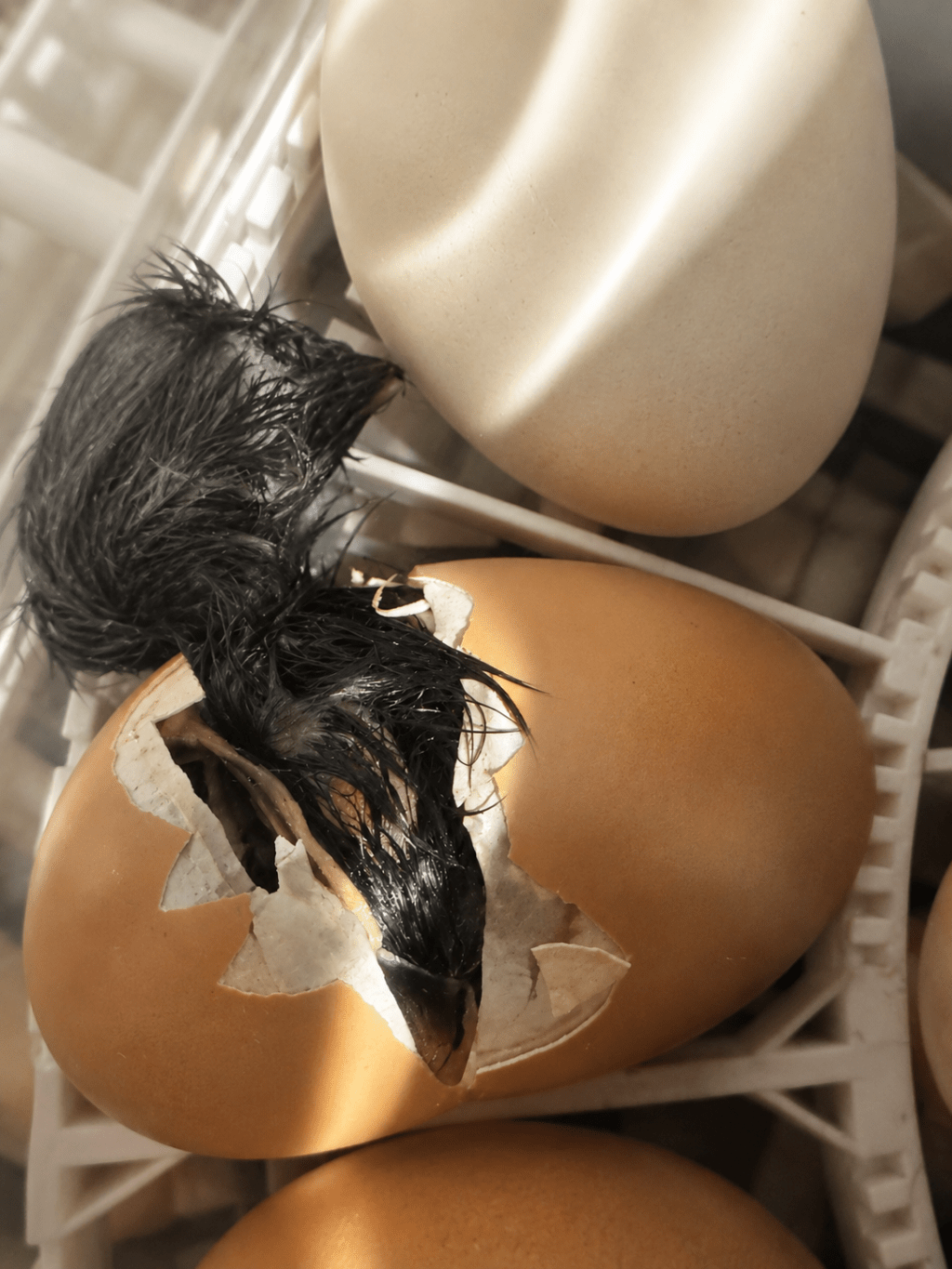
    Out of 21 eggs, 14 hatched successfully.

    At around three in the morning, my closet started peeping at me, which turns out to be a very effective auditory notification system for newly hatched chicks.

    So now, against all reasonable expectations, I apparently hatch chickens.

    Mrs. Black and her sisters seem pretty proud of themselves about the whole thing.