

So are Ray-Ban Meta smart glasses useful for blind people? For me, yes. For everyone, no.
A quick heads-up: this post contains an affiliate link to the glasses. If you buy through it, I may earn a small commission, at no extra cost to you.
I did not buy the Ray-Ban Meta smart glasses because I needed another device. I very much did not.
But I work in blindness software and technology, and smart glasses kept coming up after the NFB and ACB summer 2025 conventions. My curiosity had been piqued.
Sighted people may not realize this, but blind people use cameras all the time. Usually, the camera is how I show the AI or a human helper what I need help seeing.
My phone can already read text, describe images, and connect me to a human visual interpreter.
The problem is sometimes the phone itself. Holding it. Aiming it. Keeping the label in frame. Trying to do all of that while cooking, standing in the chicken coop, or holding an uncooperative animal.
Trying to film often means propping my phone somewhere stupid. Reading a label can mean holding the item in one hand, aiming the phone with the other, and hoping the camera is pointed at the label.
Where They Earn Their Place
I use them for reading food labels and checking chicken feed or supplement labels. I use them for quick photos, AI descriptions, and short video clips. I bought them for accessibility. Content creation came way later.
The built-in AI descriptions are useful, but I do not treat them as final. AI can describe the scene and still miss the point.
Lately I’ve been experimenting more with live AI because I can interrupt it, ask follow-up questions, and push it toward the part I actually care about.
When accuracy matters, I use Aira through the glasses. In an airport, I want a human visual interpreter helping me move through the space, not AI vaguely describing signs.
The Glasses Part Still Matters
The frames are comfortable, but they are still glasses. I can wear them for a couple of hours, but I do not forget they are on my face.
I would not talk someone into these if they already hate wearing glasses, already have a phone setup that works, or do not want another thing to charge. They are not cheap, so it’s worth considering if you’ll use them or not.
Initially, I stressed more than I needed to about the lenses. Clear? Dark? Lenses that change in the sun? I did not want to spend that much money and immediately regret the version I picked.
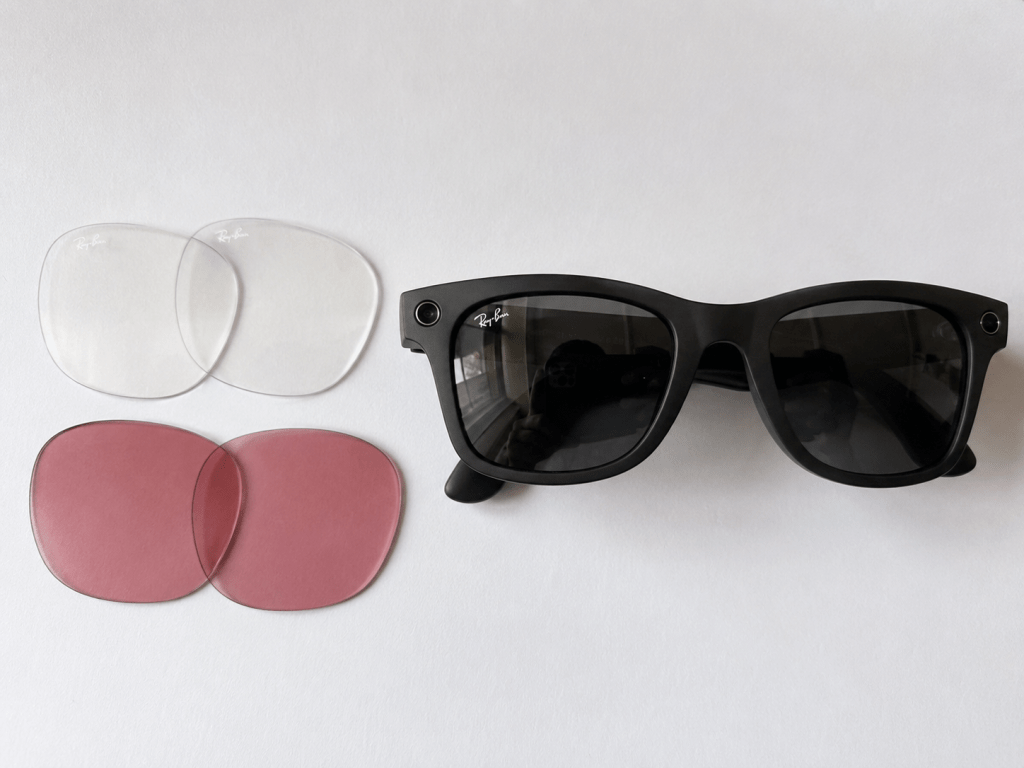
Then I found replacement lenses online. The ones I bought were around $20 to $30, and I can swap them with a firm thumb push.
I have clear lenses, dark lenses, and a rose-colored pair. The rose tint can help with contrast and glare. Even though I am blind, I still use the vision I have in some situations.
I would also never buy them for a blind person as a surprise gift. They require charging and setup. Some people do not want to deal with this kind of technology at all.
Said person should get a say before expensive technology shows up as a gift.
Would I buy them again?
Yes.
They do not replace my phone and they are not a set of working eyeballs.
But I keep reaching for them.
They have stayed in rotation.
That is probably my most honest review.
Note: This is not a sponsored post, and it is not a technical review. It is just how the Ray-Ban Meta smart glasses have worked for me.
Want a more detailed, technical review?
If you want a deeper, more technical look, these are the best reviews I’ve found written for a blind and low-vision audience:
- AccessWorld’s review from the American Foundation for the Blind — a thorough written walkthrough of the features, setup, and limitations.
- Consumer Reports: Can Ray-Ban Meta AI Glasses Guide the Blind? — a blind reviewer’s real-world, cross-country test.
- Living Blindfully (episode 283) with Jonathan Mosen — audio and transcript from a leading blindness-technology podcast.
- Be My Eyes on Ray-Ban Meta glasses — how the hands-free “call a volunteer” feature works.
 that blind chicken lady
Leave a comment